Fastness Properties
| Heat Resistance (℃) |
300 |
Alkali Resistance (1-5) |
5 |
| Light Resistance (Full Shade, 1-8) |
8 |
Migration Resistance(1-5) |
5 |
| Light (Reduced tinting, 1-8) |
7 |
Ethyl Acetate (1-5) |
5 |
| Weather Resistance (1-5) |
5 |
Ethanol (1-5) |
5 |
| Acid Resistance (1-5) |
5 |
MEK (1-5) |
5 |
Typical Applications
Pigment Blue 60 is used in a variety of industrial coloring systems.
Typical applications include:
-
Industrial coatings
Used in architectural paints, industrial coatings, and certain automotive coating formulations.
-
Plastic coloration
Suitable for engineering plastics and polymer systems processed at elevated temperatures.
-
Printing inks
Applied in certain high-performance printing ink systems.
-
Specialty materials
Used in materials that require durable blue coloration.
Key Performance Properties Related to Applications
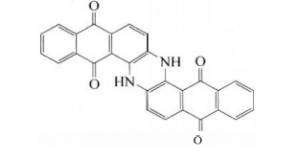
The performance characteristics of Pigment Blue 60 are influenced by its indanthrone pigment structure and crystalline stability.
Key properties include:
-
Color shade
Reddish-blue to deep blue tone.
-
Tinting strength
Moderate to strong tinting strength depending on formulation.
-
Lightfastness
Generally exhibits good resistance to light exposure in many applications.
-
Heat resistance
Suitable for polymer processing at relatively high temperatures.
-
Solvent resistance
Compatible with a wide range of solvents used in coatings and ink formulations.
Advantages
Outstanding Light and Weather Fastness – PB60 provides superior resistance to light and outdoor exposure, even exceeding that of copper phthalocyanine (CuPc) pigments, making it ideal for automotive and industrial coatings.
High Transparency and Gloss – Ensures excellent visual clarity and metallic effect, especially in automotive and decorative finishes.
Versatile Application Range – Widely used in automotive coatings, metallic decorative paints, plastics, and high-end security or currency printing inks.
Typical Limitations
Pigment Blue 60 may present certain limitations depending on formulation requirements.
Typical limitations include:
-
Tinting strength may vary depending on dispersion conditions
-
Color shade may differ slightly depending on pigment grade and formulation
-
Production complexity may result in higher cost compared with some conventional pigments
Buyer Guidance
When selecting Pigment Blue 60 for industrial formulations, several factors are typically considered:
-
Processing temperature of plastics or coatings
-
Lightfastness requirements of the final application
-
Compatibility with binder or polymer systems
-
Dispersion characteristics within the formulation
Different commercial grades may offer variations in particle size distribution and dispersion properties.
Synonyms
| Cojanil Blue |
Blue KP-531 |
Foscolor Blue 60 |
Lionol Blue 6505 |
| Monolite Blue 3R |
Cromophtal Blue A3R |
Fastogen Super Blue 6073 |
Pigment Blue Anthraquinone |
| Lufilen Blue 64-7005 |
Microlith Blue A3R-KP |
14,18-Anthrazinetetrone, 6,15-dihydro-9 |
6,15-dihydro-anthrazine-5,9,14,18-tetrone |
| 6,15-Dihydro-5,9,14,18-anthrazinetetrone, Pigment Blue 60 |
Dinaphtho[2,3-a:2′,3′-h]phenazine-5,9,14,18(6H,15H)-tetraone |
|
|
Manufacturer and Supplier Information
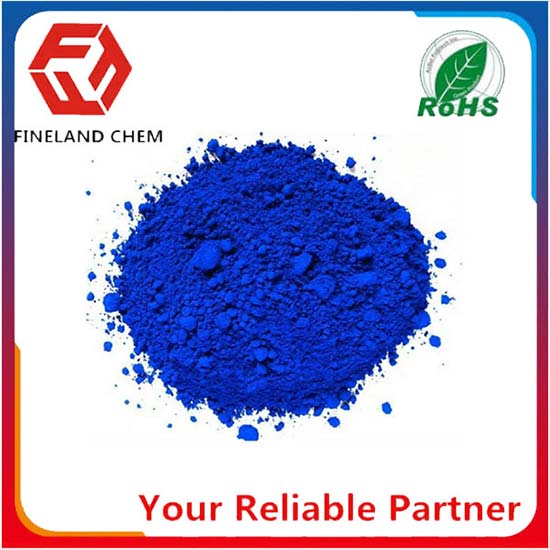
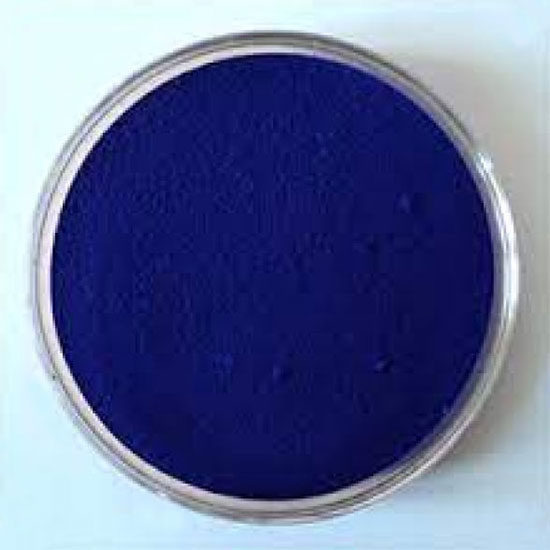
Pigment Blue 60 is produced by pigment manufacturers worldwide and is generally supplied as a powder pigment for industrial coloration applications including coatings, plastics, printing inks, and specialty materials.
Commercial grades may vary depending on crystal form, particle size distribution, and surface treatment designed for specific application systems.
Package and Delivery
● 25KG Kraft Bag, 400kg/500kg Carton Box
● Lead Time: Normally around 15 days after signed contract.
FAQ
1.What color shade does Pigment Blue 60 produce?
Pigment Blue 60 typically provides a reddish-blue to deep blue shade.
2.What pigment class does Pigment Blue 60 belong to?
Pigment Blue 60 belongs to the indanthrone organic pigment family.
3.Can Pigment Blue 60 be used in plastics?
Yes. It can be used in various plastic systems, including some engineering plastics processed at elevated temperatures.
4.Is Pigment Blue 60 suitable for coatings?
Yes. It may be used in coatings where stable blue coloration and resistance properties are required.