Fastness Properties
| Heat Resistance (℃) |
240 |
Alkali Resistance (1-5) |
5 |
| Light Resistance (Full Shade, 1-8) |
8 |
Migration Resistance(1-5) |
5 |
| Light (Reduced tinting, 1-8) |
7-8 |
Ethyl Acetate (1-5) |
5 |
| Weather Resistance (1-5) |
5 |
Ethanol (1-5) |
5 |
| Acid Resistance (1-5) |
5 |
MEK (1-5) |
5 |
Typical Applications
Pigment Blue 15:1 is used in several industrial coloring systems.
Typical applications include:
-
Industrial coatings
Used in decorative coatings, automotive coatings, and general industrial paints.
-
Plastic coloration
Suitable for plastics such as PVC, PE, PP, ABS, PS, and other polymer systems.
-
Printing inks
Applied in packaging inks, publication inks, and other printing ink formulations.
-
Textile printing
Used in textile printing systems where stable blue coloration is required.
Key Performance Properties Related to Applications
The performance characteristics of Pigment Blue 15:1 are related to its copper phthalocyanine pigment chemistry.
Key properties include:
-
Color shade
Reddish-blue tone compared with other phthalocyanine blue pigments.
-
Tinting strength
Strong tinting strength typical of phthalocyanine pigments.
-
Lightfastness
Generally provides very good resistance to light exposure.
-
Heat resistance
Suitable for plastic processing at relatively high temperatures.
-
Solvent resistance
Compatible with many solvents used in coating and printing ink systems.
Advantages
High tinting strength: Provides intense color even at low usage in inks, coatings, and plastics, saving cost.
Excellent light and heat fastness: Maintains color stability under exposure to light and temperatures up to 200°C.
Good solvent resistance: Stable in most organic solvents, ideal for offset and packaging inks.
Low migration: Minimal color migration in plastics and rubber, ensuring product appearance quality.
Wide applicability: Suitable for offset and gravure inks, water-based coatings, paper coloring, polyurethane foams, and rubber products.
Typical Limitations
Pigment Blue 15:1 may present certain limitations depending on formulation requirements.
Typical limitations include:
-
Shade differences may occur depending on pigment grade and dispersion quality
-
Some formulations may require optimized dispersion for best performance
-
Other phthalocyanine blue modifications may offer improved performance in certain applications
Buyer Guidance
When selecting Pigment Blue 15:1 for industrial formulations, several technical factors are typically considered:
-
Required shade (reddish-blue tone)
-
Processing temperature in plastics or coatings
-
Compatibility with binder or polymer systems
-
Dispersion characteristics within the formulation
Different commercial grades may vary in particle size distribution and surface treatment depending on the intended application.
Synonyms
| PB15:1 |
Phthalocyanine Blue R/S |
Filofin Blue BC |
β-Copper Phthalocyanine |
| Chromofine Blue 5028 |
Cosmenyl Blue A2R |
Oppasin Blue 6900 |
Lionol Blue 7110-V |
| Kanalake Blue BRPX |
Fastogen Blue AR-7M |
Sanyo Cyanine Blue 2035 |
Phthalocyanine Blue 15:1 |
| C.I. Pigment Blue 15:1 |
Sunfast Blue 15:1 (248-0061) |
Copper(II) phthalocyanine, β-form |
Copper(II) phthalocyanine complex |
| Copper(II)-29H,31H-phthalocyanine (β-crystal modification) |
|
|
|
Manufacturer and Supplier Information
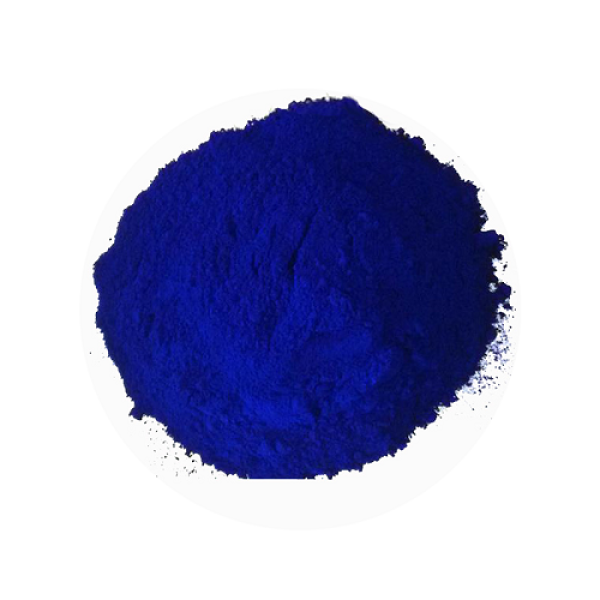
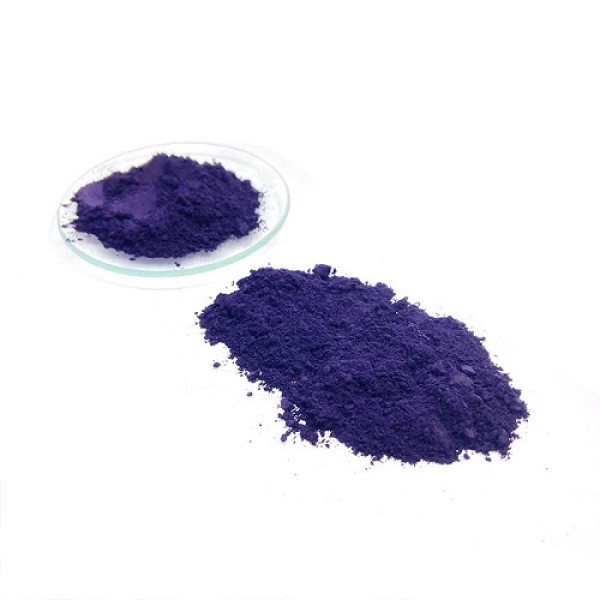
Pigment Blue 15:1 is produced by pigment manufacturers worldwide and is generally supplied as a powder pigment for industrial coloration applications including coatings, plastics, printing inks, and textile printing.
Commercial grades may differ depending on particle size distribution, crystal modification, and dispersion characteristics designed for specific industrial uses.
Package and Delivery
● 25KG Kraft Bag, 400kg/500kg Carton Box
● Lead Time: Normally around 15 days after signed contract.
FAQ
1.What color shade does Pigment Blue 15:1 produce?
Pigment Blue 15:1 generally produces a reddish-blue shade.
2.What pigment family does Pigment Blue 15:1 belong to?
It belongs to the copper phthalocyanine pigment family.
3.Can Pigment Blue 15:1 be used in plastics and coatings?
Yes. It is commonly used in coatings, plastics, and printing inks.
4.What is the difference between Pigment Blue 15:1 and Pigment Blue 15:3?
Pigment Blue 15:1 typically shows a slightly redder blue shade, while Pigment Blue 15:3 is usually greener in tone and more commonly used in many industrial applications.